
Why Charlotte Is A Real Estate Investment Epicenter

Real Estate Investing as an Inflation Hedge
June 28, 2023
What Kind of Investment Opportunity Property is Most Profitable?
August 15, 2023Why Charlotte Is A Real Estate Investment Epicenter

Why Charlotte Attracts Real Estate Investors
Charlotte offers investors a combination of employment centers, established neighborhoods, growing suburbs, and a wide range of single-family and multifamily housing options.
However, investment performance can vary considerably by neighborhood, property condition, purchase price, financing, rental demand, and management strategy. Local knowledge can help you compare opportunities more carefully.
Charlotte Is More Than a Market Headline
Population and economic growth can create a favorable backdrop for real estate, but they do not make every property a good investment. Investors still need to evaluate achievable rent, property condition, neighborhood-level demand, operating expenses, financing, and potential exit strategies.
Why Investors Continue Watching Charlotte
Charlotte’s appeal comes from several long-term market characteristics. The importance of each factor depends on the investor’s goals, timeline, budget, and preferred level of involvement.
Population and Household Growth
Charlotte continues to attract new residents, households, and businesses. This growth can support housing demand, although demand is not evenly distributed across all neighborhoods or property types.
Diverse Employment Centers
The region supports employers across banking, healthcare, energy, technology, logistics, manufacturing, and professional services. Access to employment can influence rental demand and tenant location preferences.
Urban and Suburban Options
Investors can evaluate properties near Uptown, established Charlotte neighborhoods, growing suburban communities, and surrounding towns throughout the metropolitan area.
Multiple Property Types
The market includes single-family homes, townhomes, condominiums, duplexes, and larger multifamily properties. Each comes with different financing, maintenance, management, and rental considerations.
Transportation and Accessibility
Proximity to major roads, public transportation, employment centers, schools, shopping, and recreation can affect both tenant interest and long-term resale appeal.
Potential for Long-Term Demand
Charlotte’s combination of employment, amenities, education, and housing choices gives investors several ways to pursue income and long-term ownership goals.

What Charlotte’s Growth Means for Investors
Market growth can create opportunities, but an investor should translate broad trends into property-specific decisions. Three principles are especially important.
Demand Is Local
Metro-wide trends do not tell you what renters will pay for a specific home. Comparable rentals, competing inventory, school assignments, commute patterns, and nearby amenities all matter.
The Property Must Fit the Strategy
A property suited to a long-term rental strategy may not fit a renovation, appreciation, or short-term resale plan. The acquisition should support a clearly defined investment objective.
Operations Affect Results
Tenant placement, maintenance, vacancy, lease enforcement, capital expenses, and property management can materially affect an investment’s actual performance.
Compare Charlotte Markets With an Agent
Tell us your budget, rental goals, preferred property type, and timeline. Our team can help you compare Charlotte neighborhoods and surrounding communities based on your investment criteria.
Charlotte Neighborhoods and Rental Submarkets
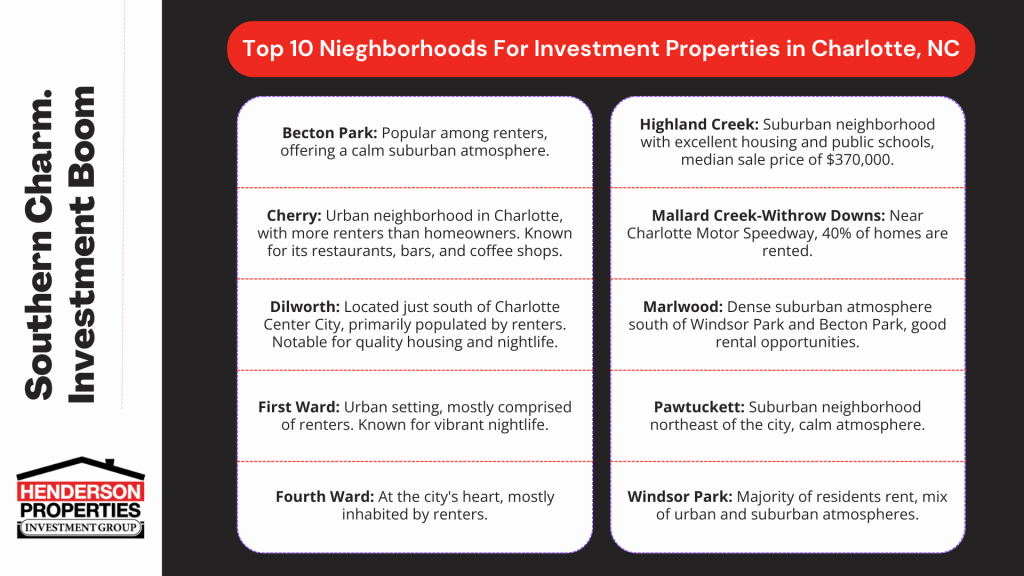
Charlotte contains a wide range of urban, suburban, historic, and developing communities. The following neighborhoods illustrate the variety investors may encounter. Inclusion does not mean that every property in the area will meet a particular investment standard.
Becton Park
Becton Park offers an established suburban setting in east Charlotte. Investors should compare property condition, nearby rental competition, expected maintenance, and achievable rent on a home-by-home basis.
Cherry
Cherry is a historic neighborhood near Uptown and Midtown. Its location can be attractive, but acquisition cost, renovation needs, lot characteristics, and surrounding development should be considered carefully.
Dilworth
Dilworth is known for historic homes, walkability, and access to employment and entertainment districts. Higher acquisition costs can make rent analysis, repair estimates, and long-term strategy especially important.
First Ward
First Ward provides an urban setting close to Uptown employment and entertainment. Condominium investors should review association fees, rental restrictions, parking, insurance, and competing rental inventory.
Fourth Ward
Fourth Ward combines historic character with an Uptown location. Investors evaluating condominiums or townhomes should examine association finances, rental caps, maintenance responsibilities, and resale considerations.
Highland Creek
Highland Creek is a large suburban community in north Charlotte. Home size, school assignments, association requirements, rental restrictions, and ongoing maintenance can influence investment suitability.
Mallard Creek-Withrow Downs
This northeast Charlotte area offers access to major corridors, employment centers, and the University City area. Investors will find varied housing stock, so comparable sales and rents should be reviewed closely.
Marlwood
Marlwood contains established homes in east Charlotte. Properties may vary in age, condition, renovations, and required repairs, making inspections and realistic maintenance projections important.
Pawtuckett
Pawtuckett is an established residential community with access to major west Charlotte transportation corridors. Property condition, commute patterns, neighborhood-level rent demand, and future repair costs should guide the analysis.
How to Evaluate a Charlotte Neighborhood Before Buying
A neighborhood can look attractive at the market level while an individual property still falls short. Before making an offer, consider the factors that will directly affect ownership and rental performance.
Achievable Rent
Use recent comparable rentals—not asking rents alone—to build a realistic income estimate.
Property Condition
Estimate immediate repairs, turnover work, major systems, and future capital expenses.
HOA and Rental Rules
Review fees, rental caps, lease requirements, architectural rules, and association finances.
Competition and Vacancy
Consider competing listings, expected leasing time, concessions, and seasonal demand.
Total Ownership Costs
Include financing, taxes, insurance, maintenance, management, vacancy, and reserves.
Exit Strategy
Think beyond the purchase and consider future resale demand, refinancing, and holding period.
How Henderson Investment Group Can Help
Our team works with investors to define acquisition criteria, compare Charlotte-area markets, evaluate potential rental properties, and coordinate the purchase process.
We can also help investors think through property management and ongoing ownership considerations before they commit to a purchase.
Start Working With a Charlotte Investment Property Agent
Share your real estate goals, preferred property type, budget, and timeline. We’ll help you identify the Charlotte-area markets and opportunities that deserve a closer look.
This information is provided for educational purposes and is not a guarantee of rental income, appreciation, investment performance, or future market conditions. Investors should complete appropriate financial, legal, property, and market due diligence before purchasing real estate.